Random Quotes: A Cool Display Font for Casual Branding Projects
First Impressions: Testing Random Quotes in a Bakery Branding Project
I recently opened a blank brand board for a local artisan bakery looking for a fresh visual identity. The brief called for something warm, approachable, and slightly whimsical—perfect for testing out Random Quotes, a display font I’d just downloaded after seeing it in a design roundup.
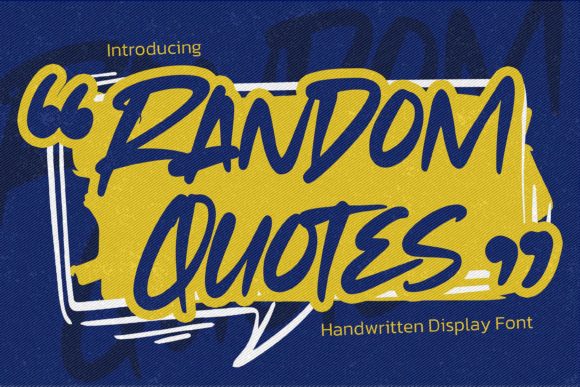
At first glance, the font immediately stood out for its playful yet polished character. It’s a cool and casual display font that feels like a modern reinterpretation of hand-lettered signage. The rounded edges and slightly uneven baseline give it a relaxed personality, while the consistent stroke weight maintains a sense of control and professionalism.
Personality and Style: What Makes Random Quotes Unique
Random Quotes isn’t meant for body copy or formal documents. It’s clearly designed as a display font, best used in short bursts to draw attention and add character. Think logo headers, product tags, social media quotes, or packaging accents.
What really caught my eye was the font’s PUA encoding. This feature made it easy to access alternate characters, ligatures, and swashes without needing special software. It’s a huge plus for designers who want to customize letterforms without the hassle of vector editing every glyph.
It has a youthful, slightly edgy vibe that feels at home in boutique branding, handmade product packaging, or creative studio identities. The font’s casual charm makes it ideal for brands that want to feel friendly and authentic without sacrificing visual polish.
Testing in Real Projects: Logo, Packaging, and Web Use
I dropped Random Quotes into the bakery’s logo concept first. It worked surprisingly well as a wordmark when paired with a simple icon. The font’s rounded shapes complemented the organic, hand-drawn illustrations we were considering. It gave the logo a soft, inviting feel that matched the brand’s artisanal positioning.
Next, I applied it to a packaging mockup for their cookie boxes. At a larger size, the font looked great—crisp, expressive, and full of character. It added a personal touch that helped differentiate the product on a crowded shelf. However, I quickly realized it wasn’t suitable for longer product descriptions or ingredient lists. As expected, it’s not designed for small text or extended reading.
On the website, I used it in the hero section of the homepage and in social media templates. It made headlines pop and added a sense of movement and energy to the layout. But again, I made sure to pair it with a clean sans-serif for subheadings and body copy to maintain readability and visual balance.
When to Use (and Avoid) Random Quotes
Because of its informal tone and decorative nature, Random Quotes works best as a headline font, logo font, or accent typeface. It’s perfect for:
- Casual brand identities (think cafés, bakeries, lifestyle brands)
- Handmade or indie product packaging
- Social media quote graphics and Instagram stories
- Business cards with a creative twist
- Poster or flyer headers that need a personal touch
However, avoid using it in:
- Legal or formal documents
- Long-form editorial design
- Small print (like footnotes or fine print)
- Corporate or luxury branding that requires a more refined tone
Practical Design Tips for Using Random Quotes
If you’re considering Random Quotes for your next project, here are a few practical tips based on my experience:
- Test it in context. Always preview the font at the actual size it will appear in the final design—especially on packaging or signage.
- Pair it wisely. I found it worked well with minimalist sans-serif fonts like Montserrat or Lato. For a more playful look, try pairing it with a script font for subheadings.
- Use the alternates. The PUA-encoded glyphs and swashes are a big plus. They add flexibility and help avoid repetition in wordmarks or short taglines.
- Check licensing carefully. Since this is a commercial font, always verify the license terms before using it in client work, especially for packaging, merchandise, or digital products.
Also, keep in mind that while the font is highly expressive, overusing it can lead to visual fatigue. Stick to using it in one or two key places per layout to let it shine without overwhelming the design.
Final Thoughts: A Versatile Addition to Any Designer’s Toolkit
Overall, Random Quotes is a solid choice for designers working on display typography projects that require a relaxed, creative edge. It’s not a one-size-fits-all font, but when used appropriately, it brings a level of warmth and personality that’s hard to replicate with more rigid typefaces.
Whether you’re designing a local coffee shop’s new identity or crafting a playful Instagram post for a handmade brand, Random Quotes can help you inject a bit of charm and authenticity into your work.